
Confirm the 2026 event plan
Big 5 Global 2026 is scheduled for 23 to 26 November at Dubai World Trade Centre. The organizer lists more than 65,000 global attendees, over 1,800 exhibitors and 17 product sectors, so an exhibition experience must communicate quickly in a dense and highly technical environment.
Confirm the hall, stand number, contractor, loading access and approved installation window before choosing the display position. Send the final stand drawing to the holographic display team so power, visitor flow and sightlines can be checked before production begins.
Show what a physical sample cannot explain
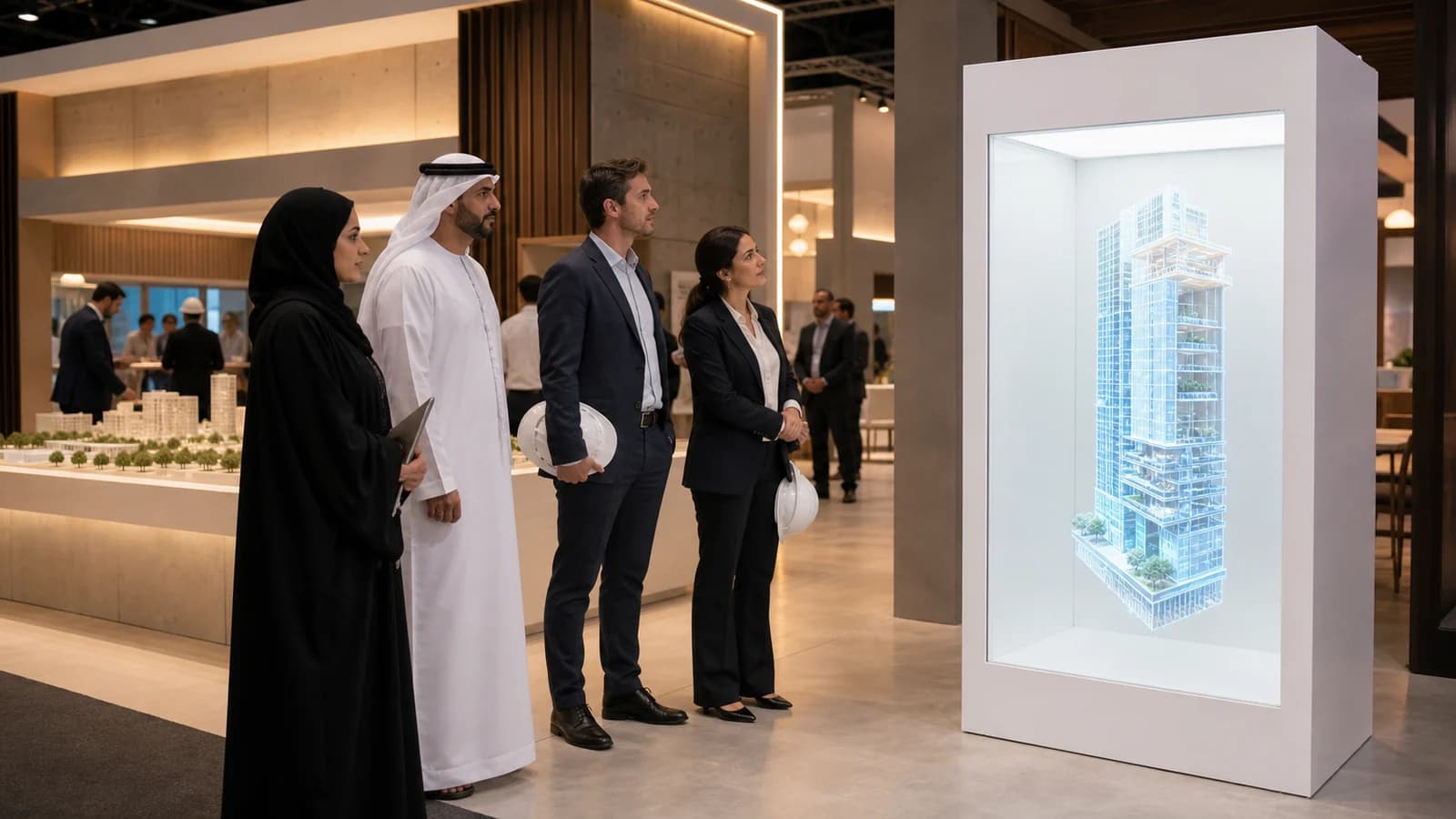
Construction stands already contain material boards, product samples and machinery. A Holobox adds the most value when it reveals information that those physical objects cannot show: a building cutaway, hidden MEP services, structural sequencing, airflow, energy performance or the way a system changes over time.
Start with the decision a buyer needs to make. A developer may need to understand the finished asset, an engineer may need to inspect system integration and a distributor may need to see installation or maintenance. Build the holographic story around that decision rather than presenting a general corporate showreel.
Turn BIM and digital-twin files into a short story
A complete BIM model is usually too detailed for an exhibition loop. Select one building zone, system or construction sequence and simplify it into a clear progression. Use depth and controlled transparency to reveal layers without losing the main subject.
Review the source model early. Geometry may need to be reduced, materials rebuilt and confidential project information removed before the asset is suitable for public display. Test the result on the actual Holobox because fine lines and labels that work on a workstation may be too small for a visitor standing several metres away.
Can a Holobox support a technical sales conversation?
Yes. The enclosed Holobox can keep a building or product visible while a representative explains the technical proposition. The strongest format is usually a short automatic loop for passing visitors, with optional deeper sequences that the stand team can trigger during a qualified conversation.
Plan what happens after the visual attracts attention. The representative should be able to move from the holographic overview to a physical sample, specification sheet, product configurator or meeting request without restarting the explanation from the beginning.
Place the display where people can pause
Position the Holobox where the content is visible from the main aisle but where a small group can stop without blocking the stand entrance. Check nearby LED walls, spotlights, reflective materials and tall machinery that could compete with the image or hide it from approaching visitors.
The HOLO DXB Holobox is a self-contained enclosed unit intended for close professional viewing. It should not be replaced by an exposed hologram fan when the experience requires technical detail, safe visitor proximity or interactive content.
Use interaction to qualify, not distract
Touch, gesture, voice or an AI avatar can help visitors choose a building type, product category, sustainability target or language. Keep the choices limited and meaningful. A long menu can slow the stand down and turn the experience into a queue rather than a conversation.
If the experience captures leads, collect only the information the sales team will actually use. Useful fields may include sector, project stage, market, specification role and the solution of interest. Explain how visitor data is handled and provide a human route for detailed commercial or engineering questions.
Prepare for four exhibition days
Run the final content under the stand's real lighting and test the full operating day before opening. Confirm stable power, audio requirements, content control and any network dependency. Keep approved content and a non-interactive fallback locally available so the main visual can continue if connectivity is interrupted.
Brief every stand representative on the message, interaction and handover. The display should support the team throughout the event rather than depending on one specialist who may be in meetings when the right buyer arrives.
- →Eight to ten weeks before: choose the use case and reserve the display position
- →Four to six weeks before: simplify and approve BIM or product assets
- →One to two weeks before: test the final loop and any interaction on the Holobox
- →Before opening: rehearse the technical explanation, qualification and follow-up
Measure qualified interest
Count outcomes that matter to the construction sales cycle: specification discussions, meetings with project stakeholders, distributor enquiries, technical demonstrations and follow-up requests. Record the content sequence that each qualified visitor saw so the team can continue with relevant information after the show.
Event dates and attendance information in this guide are based on the official Big 5 Global website, big5global.com, and should be reconfirmed with the organizer before production. HOLO DXB is not affiliated with or endorsed by Big 5 Global.