Start with one clear objective
Decide whether the display should stop traffic, demonstrate a product, explain a technical system, introduce an AI host or capture leads. A display trying to perform every role usually produces weaker content and a less obvious call to action.
The objective determines the unit, location, content length and whether interaction is genuinely useful.
Plan the position before producing content
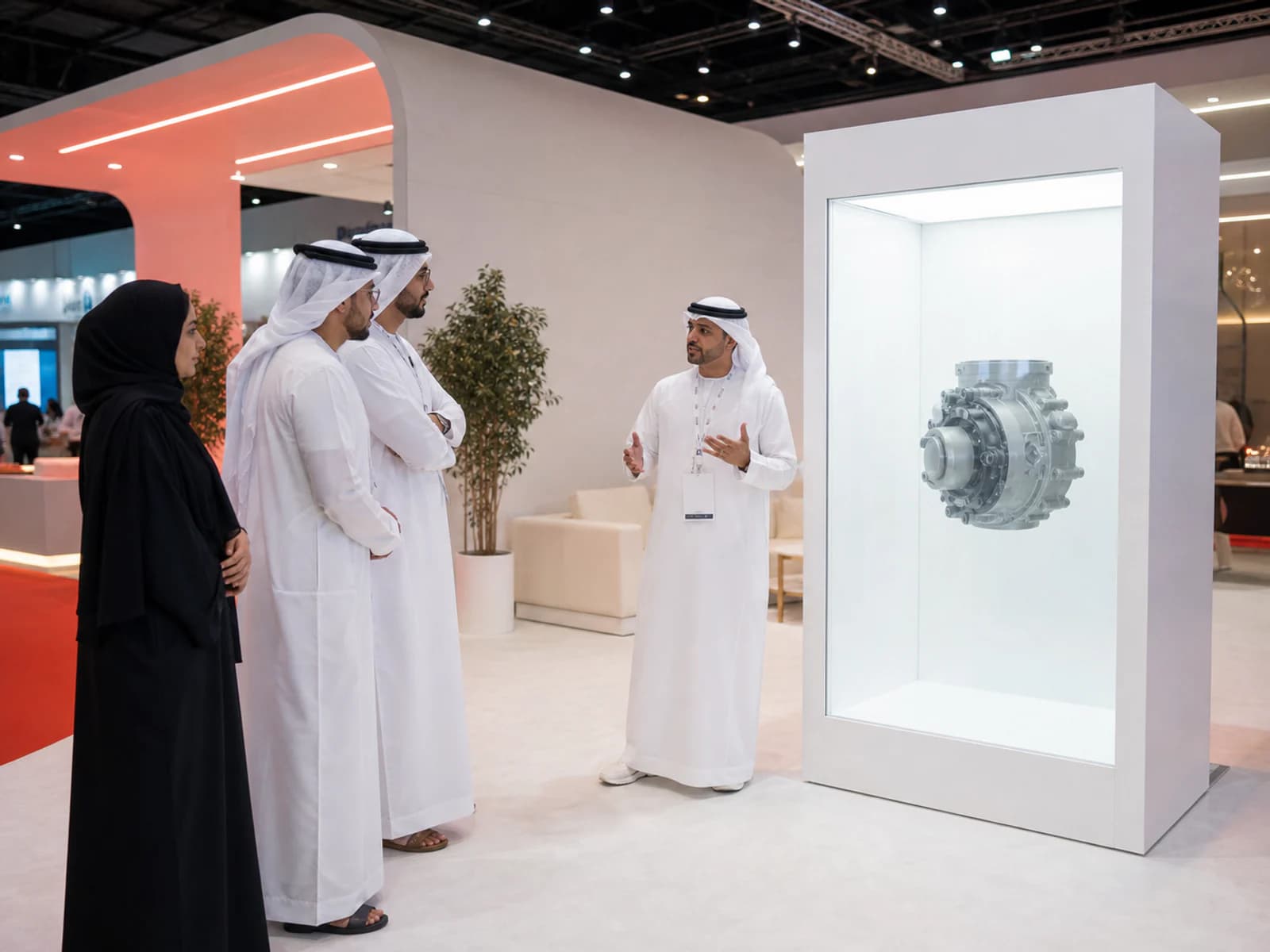
Map the main visitor flow and place the display where the image is visible without blocking the stand entrance. Consider viewing distance, nearby LED walls, direct spotlights, power access and the space needed for visitors to pause.
Send the stand plan or a rendered view to the technical team early. A small change in placement can affect the best unit size and content composition.
Design a short content loop
Exhibition visitors decide quickly whether to stop. Lead with the strongest visual, keep the product or subject recognizable and use a clean branded ending. A concise loop can repeat naturally throughout the day without requiring visitors to wait for the main reveal.
If the display includes a QR code or lead action, give it enough screen time to be used. The sales team should also know what the visitor has just seen so they can continue the story.
Allow time for installation and rehearsal
A standard installation commonly needs 60 to 120 minutes for positioning, power, content loading and calibration. Venue access rules, loading schedules and exhibitor deadlines may require an earlier arrival.
Test the final content under the actual stand lighting and rehearse any interactive or live sequence before the exhibition opens.
Measure more than attention
Agree on a simple measurement plan before the event. Useful signals include scans, qualified conversations, booked demonstrations and dwell time around the display. The right measure depends on the commercial objective, not the novelty of the technology.
- →QR or landing-page visits
- →Qualified leads captured by the stand team
- →Demonstrations or meetings booked
- →Content interactions
- →Footfall during comparable time periods