What is a Holobox?
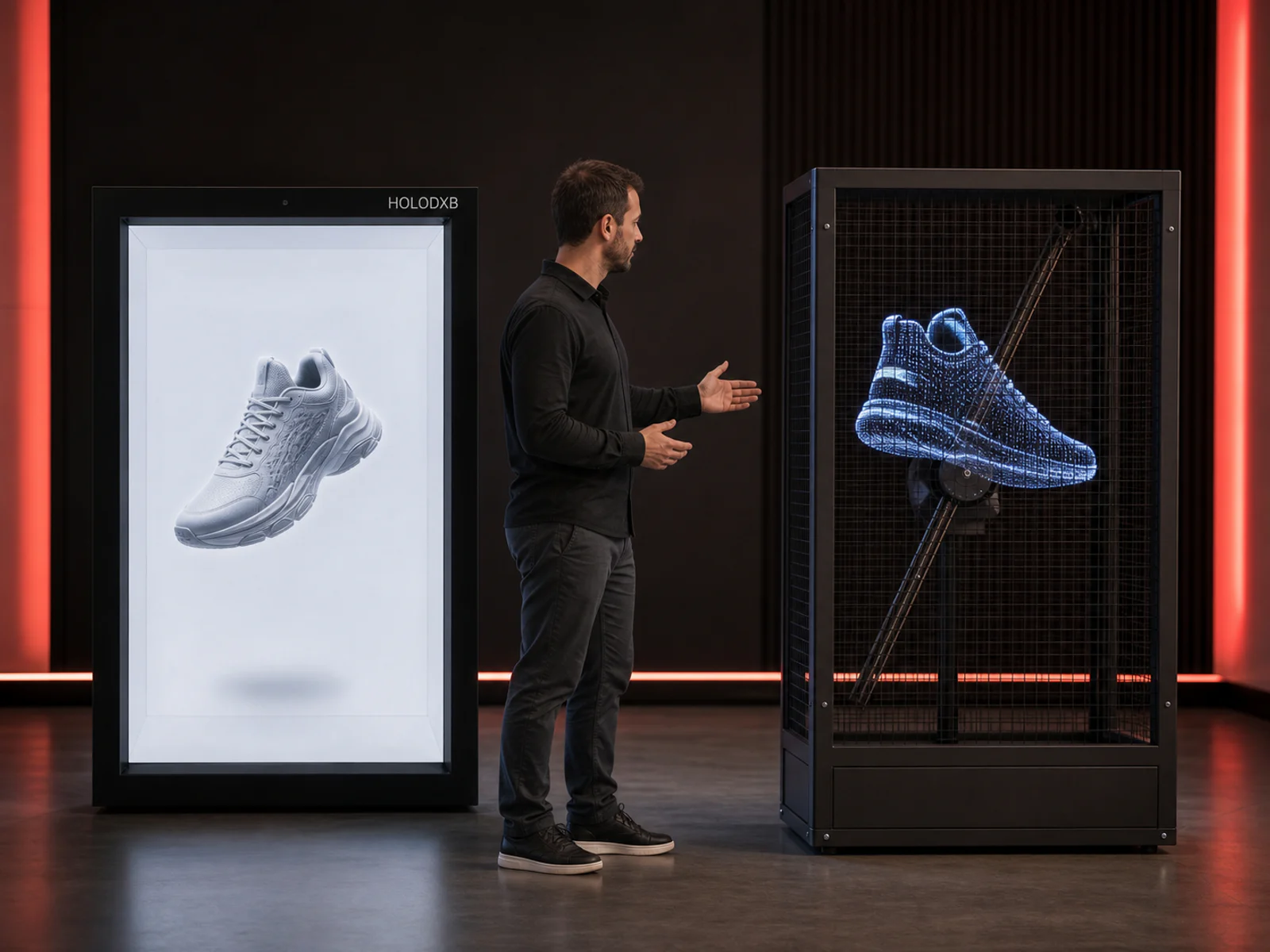
A Holobox is a self-contained display that presents glass-free 3D content inside a defined viewing area. It can show a person, product, character or AI avatar with depth and a floating appearance, without requiring visitors to wear a headset or special glasses.
The enclosure gives the image a physical frame and makes the installation feel like a finished product rather than an exposed piece of equipment. For exhibitions, retail activations and corporate events, that controlled presentation also makes it easier to plan audience distance, branding and interaction.
Is a Holobox the same as a hologram fan?
No. Both can create a floating-image effect, but they use different display methods and suit different visitor experiences.
A hologram fan uses rapidly rotating LED blades to draw an image in the air. Against the right background, the unlit space between the LEDs creates the impression that the subject is floating.
Visual style and content
Holobox content works well for detailed products, characters, configurators and branded sequences where the surrounding presentation matters. The format can support longer scenes and more controlled storytelling.
Hologram fans are effective for bold logos, short animations and simple objects that can be understood quickly. Fine detail and dark imagery may be less suitable, particularly in bright or visually busy environments.
Placement and audience distance
A Holobox is usually placed where visitors can approach it directly: an exhibition stand, retail counter, showroom corner or lobby. Unit size should be matched to audience distance and surrounding light.
A fan installation needs a safe mounting position, suitable background and professional guarding or separation from visitors. It is often positioned above eye level or inside a protected display area.
Interaction and live experiences
Choose a Holobox when the brief includes touch, gesture, voice, AI avatars, live holographic conferencing or a product configurator. The enclosure and integrated hardware provide a stronger base for these experiences.
Choose a hologram fan when the objective is a lightweight visual attraction and the content does not need interaction or detailed product exploration.
Which display is better for a Dubai event?
Use a Holobox when visitors need to stop, explore or interact, or when the content includes a detailed product, presenter or AI avatar. Use a protected hologram fan when visitors only need to notice a bold, simple visual from a distance.
The best choice still depends on venue lighting, viewing distance, visitor flow, content and safety requirements. If the venue is uncertain, send a photograph and the expected viewing distance before selecting the display.